School-Based Health Centers Fill Gaps in Kids’ Health Care
KThorpe • February 16, 2022
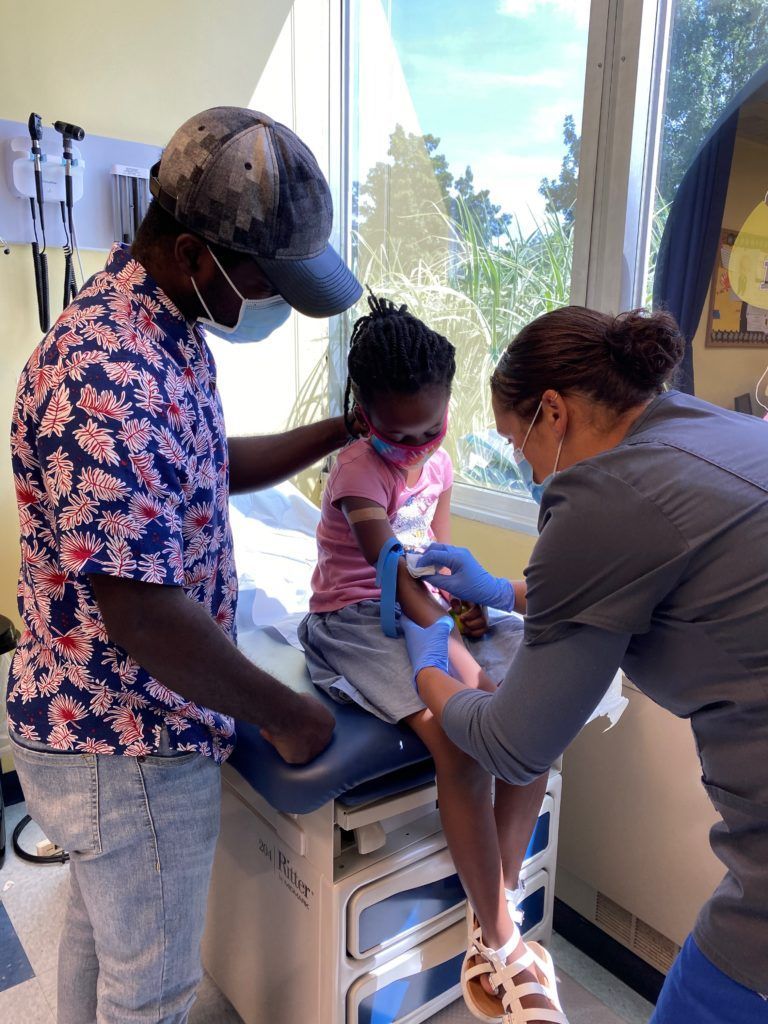
Child receiving health care services
Father comforts his young daughter as she gets bloodwork done at one of our SBHCs

Why School-Based Health Centers Matter

February is National School-Based Health Center Awareness Month , a campaign to raise awareness of the valuable services offered by school-based health centers (SBHCs). Many parents across Connecticut struggle to access health care services for their children. Lack of health care is a problem that no one, especially children, should face. That is why, as part of InterCommunity Health Care’s mission to provide affordable and accessible healthcare to all, we work with schools to provide health care for kids.

Intercommunity’s school-based health centers (SBHCs) serve nearly 2,500 students in seven East Hartford schools. The services go beyond those of the school nurse to support every student’s physical, mental, and emotional wellbeing. 

Licensed by the Department of Public Health, SBHCs give students, including those with limited or no insurance, access to free mental and physical health services within the schools. SBHCs minimize disruptions to learning and eliminate transportation, financial, and other traditional barriers to care.  
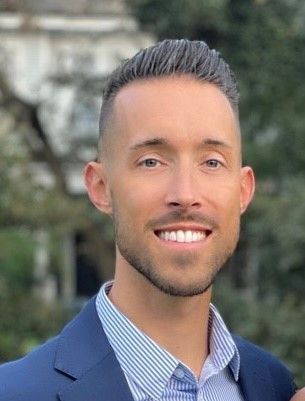
Man smiling
Joe Leroy, Principal of Mayberry Elementary

“The services are right there,” says Joe Leroy, Principal of Mayberry Elementary. “Parents can schedule appointments, have their child enrolled, and be seen during the school day on-site, which results in minimal disruption to their child’s academic day and the parent’s work-day.”

Since January of 2021, InterCommunity’s SBHCs have provided around 10,000 mental health and primary care visits. Nearly 6,000 are mental health services including counseling, crisis intervention, and mental health screenings. The remaining include primary care services such as physicals, vaccines, treatment of ongoing conditions, and lab testing. While the centers do not replace pediatricians, they do provide essential care for hundreds of kids without insurance.

Sharon Bremner, Director of Pupil Personnel Services for East Hartford Public Schools, explains the importance of these services. “The centers play a vital role in the community when families may not have access to a pediatrician. It’s a way for a child starting the school year to get their up-to-date physicals and vaccinations. It’s a great opportunity for our families.”

Addressing the Major Issues

In a statement from December 2021, U.S. Surgeon General Dr. Vivek Murthy stressed the need to address the youth mental health crisis. Limited resources make addressing these needs challenging for schools.

Woman smiling
Sharon Bremner, EHPS Director of Pupil Personnel Services

“With the pandemic and the increasing need for children’s mental health care, [SBHCs] have played a tremendous role in being able to support our kids,” said Bremner.

Staff see students needing more support around depression and anxiety, trauma, absenteeism (missing school), nutrition, and food insecurity.

“Food insecurity is a huge issue,” says Tricia Orozco, InterCommunity’s Director of SBHCs.

Though one of the richest states in the country, 11.9% of CT residents are considered food insecure (not having reliable access to a sufficient amount of affordable, nutritious food). East Hartford is one of the state’s top five cities for food insecurity. Sixty-one percent of East Hartford public school students qualify for free or reduced lunch. In August 2020, United Way reported that 43% of households in East Hartford do not earn enough money to meet their basic human needs. Black and Hispanic residents are most impacted.

SBHCs have resources to help including a food pantry at Mayberry Elementary School and partnerships with Food Share CT to host holiday food drives. However, we continue to see more demand.  

Group of people holding food items and smiling
Tricia Orozco (far left) with school-based health center staff as they organize Thanksgiving dinner ingredients for SBHC families

InterCommunity recently received a grant from CIGNA to launch a food access program. This program will work within the SBHCs to link students and their families with community resources, education and activities about healthy eating, and other tools.

“When basic health needs and/or social-emotional needs are met, [kids] are more successful in school,” Leroy said. “Teachers utilize SBHCs not as something extra, but as an addition to our team.”

Going Above and Beyond
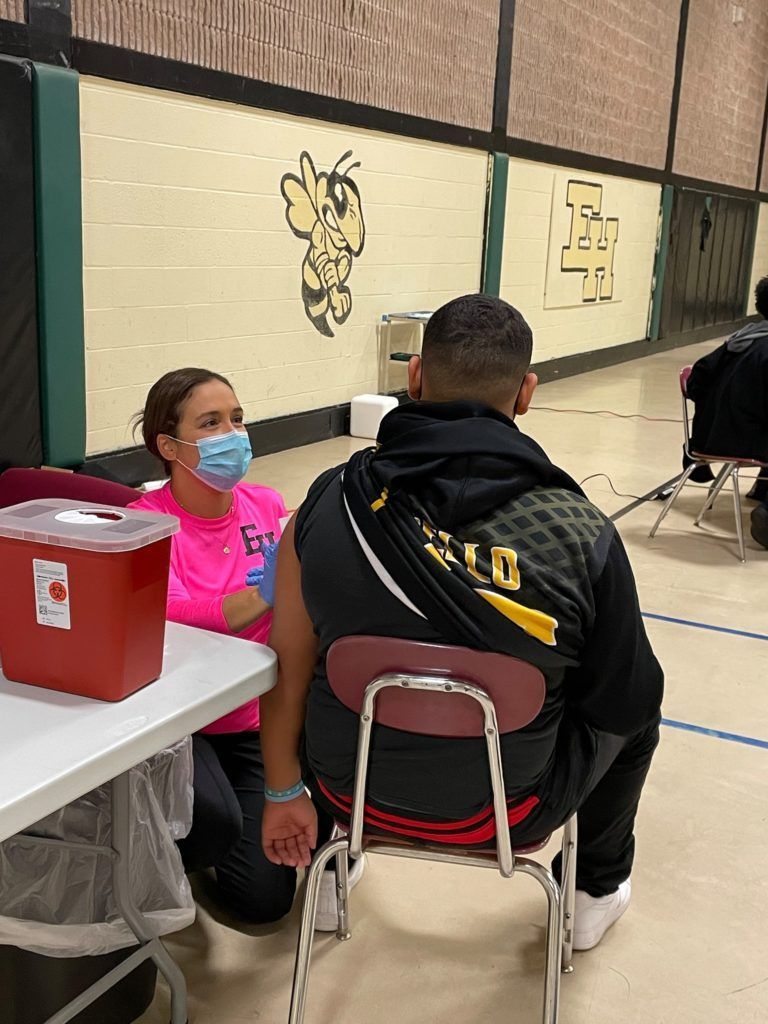
Teenager receiving COVID vaccine
East Hartford high school student receives COVID vaccine

Every day InterCommunity staff work hard to address students’ needs.

“Our SBHCs staff go above and beyond their job description,” Orozco said, “They are compassionate and caring. They have offered services throughout the pandemic in person and reduced barriers to care for parents and students. I’m proud to oversee this team of dedicated employees.”

This work would not be possible without collaboration and support of the East Hartford Board of Education, the Administration of the East Hartford Public Schools (EHPS), the faculty, community stakeholders, students, and families.

“Thank you to the administration of the EHPS for partnering with us. We appreciate the strong relationships that we have built with you,” said Orozco. “And a thank you to the East Hartford community for welcoming us into your schools.”

How to Enroll Your Child

SBHC services are available in English and Spanish to students enrolled in the following schools: East Hartford High, Synergy Alternative, East Hartford Middle, Mayberry Elementary, Silver Lane Elementary, Langford, and Early Childhood Learning Center (ECLC) at Hockanum School. Enroll your child in SBHC services by calling the school directly. For more information, please visit the SBHCs page.

Stock image of three men being friendly and smiling at a gym.
June 8, 2026
Men's Health Month is the perfect time to focus on your well-being and ensure you're on track for a healthy future with these five important health screenings.
A blood draw test tube next to  a checklist of antigens for Hepatitis testing.
May 28, 2026
Hepatitis C is often called a “silent” disease because many people who carry the virus feel perfectly healthy, often for years. Yet beneath the surface, the infection can slowly damage the liver as it progresses, leading to serious complications such as cirrhosis, liver failure, or liver cancer. The good news is...
A therapist and a women sit across from each other in deep conversation.
May 28, 2026
Mental health conditions touch nearly every community, workplace, and family in America, yet many people continue to struggle in silence. According to the National Institute of Mental Health (NIMH), approximately 22.8 percent of adults — roughly one in five people — experience a diagnosable mental illness each year.
A photo of a nurse giving a check up o a young girl with her mother beside her at a clinic.
April 23, 2026
April is National Minority Health Month, highlighting the ongoing health disparities that disproportionately impact communities across the United States.
A photo of a blue sky background with a sign in the foreground that says
April 15, 2026
Chronic stress can lead to more serious conditions such as heart disease and decreased immune function. A provider can help you manage your stress effectively.
InterCommunity's New President and CEO Tyler Booth onstage at our 2025 gala.
April 1, 2026
Dear InterCommunity Staff and Community Partners, It is a privilege to assume the role of President & CEO and to lead InterCommunity during such a significant period for the nation's healthcare system. My experience over the past twenty years with many of you has highlighted that our core strength is derived not only from clinical expertise but also from the compassion, dedication, and teamwork that characterize our culture. To our staff: Thank you for being truly mission driven. Each patient you assist, every challenge you meet, and all innovations you adopt significantly impacts the lives of those who rely on our care. I am committed to actively listening, learning, and collaborating with you to ensure that you have the necessary tools, support, and recognition to thrive. To our community partners: Your collaboration is vital to achieving our shared vision of healthier and stronger communities. Together, we will strive to enhance access, improve outcomes, and address the evolving needs of those we serve. I look forward to strengthening our partnerships and exploring new opportunities for collective meaningful impact. This leadership transition presents a chance to build on our achievements, welcome innovation, and shape the future of care with integrity and excellence. I am truly grateful for the opportunity to embark on the journey ahead alongside all of you. With great appreciation, Tyler V.R. Booth, LCSW InterCommunity President and Chief Executive Officer
March 23, 2026
“Chronic kidney disease (CKD) remains one of the most serious long-term complications affecting our patient population at InterCommunity,” stated Dr. Zachary Steinbach, Medical Lead at InterCommunity Health Care. “Often called a 'silent' condition, CKD can progress for years without causing noticeable symptoms. Unfortunately, by the time symptoms appear, the disease is often in its most advanced stages.” Advanced CKD can lead to severe health consequences, including cardiovascular disease, fluid overload, and the need for dialysis or a kidney transplant. According to national health data, millions of Americans are living with CKD — and many are unaware they have it. Risk factors include diabetes, high blood pressure, obesity, and a family history of kidney disease. Given this, our recent focus at InterCommunity has been closing the diabetes care gap to help prevent these outcomes. Early intervention — through blood pressure control, blood sugar management, and healthy lifestyle choices — can significantly slow disease progression. At InterCommunity, we are committed to raising awareness, promoting early detection, and supporting patients in managing their kidney health. If you or anyone you know needs assistance with diabetes, contact InterCommunity at 860-569-5900.
March 23, 2026
Epilepsy is more common than many people realize and is often misunderstood. It is a neurological disease that affects the central nervous system and is marked by recurring seizures. These seizures occur when clusters of nerve cells in the brain send out abnormal electrical signals, briefly disrupting the brain’s usual rhythm and activity. Depending on the area of the brain involved, seizures can look very different, from brief lapses in awareness or staring spells to full-body convulsions. A diagnosis of epilepsy is typically made when a person has two or more unprovoked seizures, a single seizure with a high likelihood of recurrence, or when a specific epilepsy syndrome is identified. The International League Against Epilepsy (ILAE) classifies epilepsy as a disease rather than a disorder, underscoring its seriousness and the importance of timely, appropriate care. Epilepsy can develop at any age and has many possible causes, including genetics, brain injury, stroke, infection, or developmental conditions, though in many cases the exact cause is unknown. While seizures can be frightening, epilepsy is often manageable. Medications help control seizures in about two-thirds of people, and other treatments such as specialized diets, nerve stimulation, or surgery may be effective when medication alone is not enough. Globally, epilepsy affects an estimated 50 million people, roughly 1 in every 100 individuals. Yet stigma and misunderstanding remain significant challenges. Learning seizure first aid, supporting ongoing research, and advocating for accessible, affordable treatment can all make a meaningful difference. With greater awareness comes greater compassion and a clearer path to improving the lives of those affected. Aid for Seizures Watching someone have a convulsive seizure can be unsettling, but knowing what to do can make all the difference. During this type of seizure, a person may lose consciousness and fall. The body often becomes stiff at first, followed by rhythmic jerking or twitching of the arms and legs. Recovery can take several minutes, and the person may feel confused or exhausted afterward. Here’s how you can help safely and effectively: Stay calm. Your steady presence matters more than you think. Protect from injury. Gently guide them away from danger and clear the area of sharp or hard objects. Ease them onto their side as the seizure subsides. This helps keep the airway clear and allows fluids to drain. Do not put anything in their mouth. It is a myth that someone can swallow their tongue. Do not restrain their movements. Let the seizure run its course. Avoid food or drink until they are fully alert and able to swallow safely. Time the seizure. Most seizures end within a few minutes. Call emergency services if it lasts longer than five minutes, if seizures happen back-to-back, or if the person is injured, pregnant, or has diabetes. Stay with them until they are fully awake and aware. Offer reassurance as they recover.  Learning these simple steps can turn a moment of fear into one of support and safety. For more information about epilepsy and seizure first aid, visit the Epilepsy Foundation at www.epilepsy.com .
February 27, 2026
InterCommunity’s South Windsor Clinic launched its Extended Outpatient Program (EOP) on January 27, 2026, in response to a clear and growing demand for a higher level of accessible mental health care. EOP is suitable for clients who need to work, attend school, and have ongoing family obligations, and want to re-engage in care or are looking to maintain long-term accountability. EOP is designed for individuals requiring more support than traditional outpatient therapy, in that it's an elevated outpatient experience for exploring and addressing substance use disorders and the underlying issues that fuel behavioral health issues. EOP provides structured yet flexible support, including weekly group therapy and access to mental health and medical support. Program Manager Maria Bye explains that EOP “bridges the gap between InterCommunity’s different levels of care and outpatient treatment, which allows patients to maintain work or school commitments while receiving structured therapeutic support.” The expansion is expected to serve an additional twelve plus patients per month. InterCommunity’s South Windsor Clinic will now offer daytime sessions, evening group sessions, telehealth check-ins, and individual therapy. Bye says, “The response to the Extended Outpatient Program has been very positive from our clients and community partners. Community partners appreciate having an additional referral option, and clients report feeling more supported, connected, and accountable.” If you or someone you know could benefit from an Extended Outpatient Program, please call InterCommunity at (860) 569-5900 ext. 635 or visit www.intercommunityct.org .
February 27, 2026
In today’s fast-paced environment, sleep is often sacrificed in the interest of productivity. In reality, adequate rest is a foundational component of overall health and performance. With Sleep Awareness Week taking place from March 8 to 14, it is an appropriate time to reflect on the critical role sleep plays in our daily lives. “Adequate sleep plays a central role in maintaining a healthy lifestyle,” stated Dr. Zachary Steinbach, Medical Lead at InterCommunity Health Care. “It supports brain function, metabolic regulation, cardiovascular health, and immune system activity. During deep and REM sleep, the brain consolidates memory, clears metabolic waste, and stabilizes mood‑regulating pathways, while the body fine-tunes hormone balance involved in appetite, glucose control, and stress response. Chronic sleep loss can increase the risk of hypertension, insulin resistance, weight gain, and impaired immune defense.” Most adults require seven to nine hours of quality sleep each night. Maintaining a consistent sleep schedule, limiting caffeine later in the day, reducing screen exposure before bedtime, and creating a cool, dark, and quiet sleep environment can significantly improve sleep quality. Sleep disorders are conditions that disrupt healthy sleep patterns. They often show up as persistent trouble falling or staying asleep, loud snoring, gasping during sleep, extreme daytime fatigue, or unusual movements or behaviors at night. If these issues are ongoing or affecting daily life, it’s important to speak with a healthcare professional who can evaluate what’s going on and guide next steps. If you or anyone you know needs assistance with a sleep disorder, contact InterCommunity at 860-569-5900.