Ready to Take the First Step Toward Healing?

Use the forms linked below to refer yourself for services. It's fast, easy, and confidential.

If you would like to receive help today, please call to find out our walk-in hours or fill out our outpatient referral form.

Come find out how we've changed the meaning of care. And caring.

Primary Care Services

Health
Clinic Services

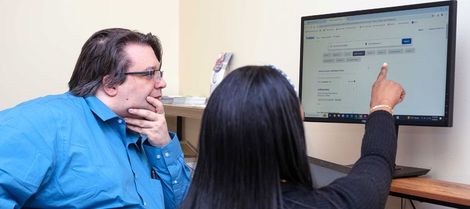
Get the right care, right now. We offer physical health, mental health, and substance use recovery services for adults, kids, and teens with same-day appointments in our Hartford, East Hartford, and South Windsor clinics. Our professional, bilingual (Spanish/English) staff is dedicated to treating your family with compassion and respect.

See all primary care services
Services in Your Community

Services in Your

Community

InterCommunity provides comprehensive care coordination and support, offering assistance with referrals to specialists, access to community resources, skill-building opportunities, employment services, and other community-based services to support your whole-person wellness.

See all services in your community
Residential Recovery

Residential

Recovery Services

Our residential programs support individuals recovering from substance use and/or mental health issues. We offer a full spectrum of Residential Addiction Recovery Programs (from Withdrawal Management/Detox to clinically monitored substance free housing) and Mental Health Support (supervised housing for chronic conditions). We empower individuals to build resilience and improve their quality of life at any stage of recovery.

See all residential recovery services

Recent News From InterCommunity Health Care

March 23, 2026
“Chronic kidney disease (CKD) remains one of the most serious long-term complications affecting our patient population at InterCommunity,” stated Dr. Zachary Steinbach, Medical Lead at InterCommunity Health Care. “Often called a 'silent' condition, CKD can progress for years without causing noticeable symptoms. Unfortunately, by the time symptoms appear, the disease is often in its most advanced stages.” Advanced CKD can lead to severe health consequences, including cardiovascular disease, fluid overload, and the need for dialysis or a kidney transplant. According to national health data, millions of Americans are living with CKD — and many are unaware they have it. Risk factors include diabetes, high blood pressure, obesity, and a family history of kidney disease. Given this, our recent focus at InterCommunity has been closing the diabetes care gap to help prevent these outcomes. Early intervention — through blood pressure control, blood sugar management, and healthy lifestyle choices — can significantly slow disease progression. At InterCommunity, we are committed to raising awareness, promoting early detection, and supporting patients in managing their kidney health. If you or anyone you know needs assistance with diabetes, contact InterCommunity at 860-569-5900.
March 23, 2026
Epilepsy is more common than many people realize and is often misunderstood. It is a neurological disease that affects the central nervous system and is marked by recurring seizures. These seizures occur when clusters of nerve cells in the brain send out abnormal electrical signals, briefly disrupting the brain’s usual rhythm and activity. Depending on the area of the brain involved, seizures can look very different, from brief lapses in awareness or staring spells to full-body convulsions. A diagnosis of epilepsy is typically made when a person has two or more unprovoked seizures, a single seizure with a high likelihood of recurrence, or when a specific epilepsy syndrome is identified. The International League Against Epilepsy (ILAE) classifies epilepsy as a disease rather than a disorder, underscoring its seriousness and the importance of timely, appropriate care. Epilepsy can develop at any age and has many possible causes, including genetics, brain injury, stroke, infection, or developmental conditions, though in many cases the exact cause is unknown. While seizures can be frightening, epilepsy is often manageable. Medications help control seizures in about two-thirds of people, and other treatments such as specialized diets, nerve stimulation, or surgery may be effective when medication alone is not enough. Globally, epilepsy affects an estimated 50 million people, roughly 1 in every 100 individuals. Yet stigma and misunderstanding remain significant challenges. Learning seizure first aid, supporting ongoing research, and advocating for accessible, affordable treatment can all make a meaningful difference. With greater awareness comes greater compassion and a clearer path to improving the lives of those affected. Aid for Seizures Watching someone have a convulsive seizure can be unsettling, but knowing what to do can make all the difference. During this type of seizure, a person may lose consciousness and fall. The body often becomes stiff at first, followed by rhythmic jerking or twitching of the arms and legs. Recovery can take several minutes, and the person may feel confused or exhausted afterward. Here’s how you can help safely and effectively: Stay calm. Your steady presence matters more than you think. Protect from injury. Gently guide them away from danger and clear the area of sharp or hard objects. Ease them onto their side as the seizure subsides. This helps keep the airway clear and allows fluids to drain. Do not put anything in their mouth. It is a myth that someone can swallow their tongue. Do not restrain their movements. Let the seizure run its course. Avoid food or drink until they are fully alert and able to swallow safely. Time the seizure. Most seizures end within a few minutes. Call emergency services if it lasts longer than five minutes, if seizures happen back-to-back, or if the person is injured, pregnant, or has diabetes. Stay with them until they are fully awake and aware. Offer reassurance as they recover.  Learning these simple steps can turn a moment of fear into one of support and safety. For more information about epilepsy and seizure first aid, visit the Epilepsy Foundation at www.epilepsy.com .
February 27, 2026
InterCommunity’s South Windsor Clinic launched its Extended Outpatient Program (EOP) on January 27, 2026, in response to a clear and growing demand for a higher level of accessible mental health care. EOP is suitable for clients who need to work, attend school, and have ongoing family obligations, and want to re-engage in care or are looking to maintain long-term accountability. EOP is designed for individuals requiring more support than traditional outpatient therapy, in that it's an elevated outpatient experience for exploring and addressing substance use disorders and the underlying issues that fuel behavioral health issues. EOP provides structured yet flexible support, including weekly group therapy and access to mental health and medical support. Program Manager Maria Bye explains that EOP “bridges the gap between InterCommunity’s different levels of care and outpatient treatment, which allows patients to maintain work or school commitments while receiving structured therapeutic support.” The expansion is expected to serve an additional twelve plus patients per month. InterCommunity’s South Windsor Clinic will now offer daytime sessions, evening group sessions, telehealth check-ins, and individual therapy. Bye says, “The response to the Extended Outpatient Program has been very positive from our clients and community partners. Community partners appreciate having an additional referral option, and clients report feeling more supported, connected, and accountable.” If you or someone you know could benefit from an Extended Outpatient Program, please call InterCommunity at (860) 569-5900 ext. 635 or visit www.intercommunityct.org .
See All Recent News