PTSD: Causes and Symptoms

Marlene Kurban • May 31, 2021

Post-traumatic stress disorder (PTSD) affects people from all walks of life and can occur after people experience or witness a life-threatening event, including natural disasters such as earthquakes, hurricanes and floods, serious auto accidents, assault, combat, sexual abuse, or the sudden death of a loved one. 

While it’s normal to have stress reactions after a traumatic event, most people recover from their experiences.  However, if these reactions go on for weeks and interfere with daily life, people may be diagnosed with PTSD. There are four types of PTSD symptoms:

  • Reliving the event.   This may take the form of nightmares or flashbacks, when people feel the same fear and distress as when the event took place.
  • Avoiding activities, people, or places that are reminders of the event.  People may find it too difficult to think or talk about the event, and instead keep their feelings bottled up.
  • Negative changes in beliefs and feelings.  Sometimes these changes make it difficult for people to trust others or have close relationships, and they may be easily irritated and angry.
  • Feeling jumpy or keyed up resulting in problems concentrating, sleeping, and being easily startled.


People should seek professional help when symptoms last longer than four weeks, cause distress, and disrupt work or home life.

The post PTSD: Causes and Symptoms appeared first on InterCommunity.

A girl and a doctor smile and touch hands.
July 28, 2026
InterCommunity is hosting an all-day community event on 8/6 to celebrate National Health Center Week! Read the history of NHCW and learn more about this free event.
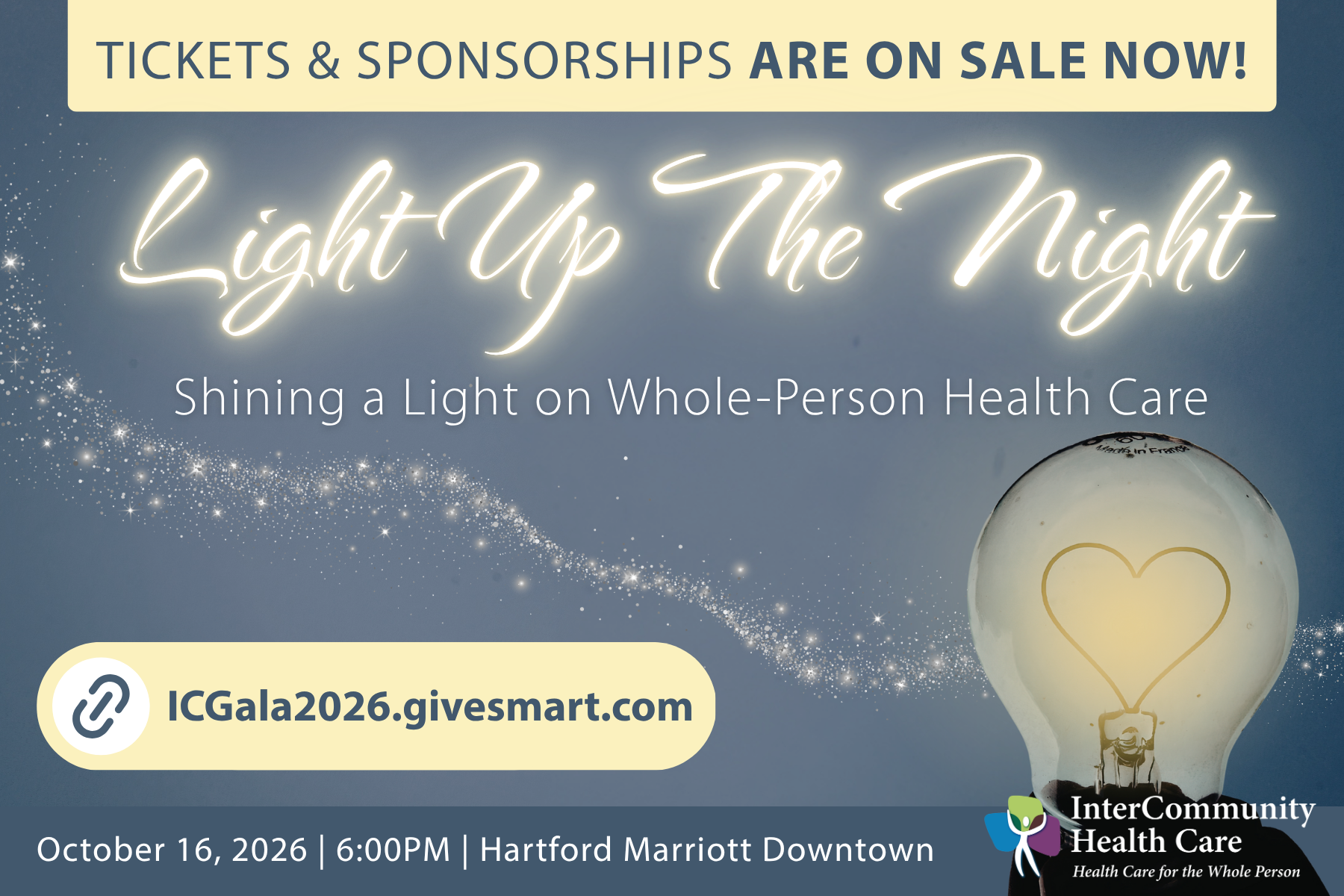
2026 Light Up the Night Gala graphic that lists event information and shows a lightbulb with a heart
July 27, 2026
InterCommunity is excited to invite you to support our mission at our annual Signature Gala Event!
A therapist speaks with a patient.
June 23, 2026
InterCommunity emphasizes the importance of mental health alongside physical health. Post-Traumatic Stress Disorder (PTSD) illustrates the significance of this work.
A male doctor and a male patient both smiling.
June 23, 2026
Men avoid going to the doctor even when they think they should. While skipping an appointment might seem harmless, it can mean missing signs of serious conditions.
Stock image of three men being friendly and smiling at a gym.
June 8, 2026
Men's Health Month is the perfect time to focus on your well-being and ensure you're on track for a healthy future with these five important health screenings.
A blood draw test tube next to  a checklist of antigens for Hepatitis testing.
May 28, 2026
Hepatitis C is often called a “silent” disease because many people who carry the virus feel perfectly healthy, often for years. Yet beneath the surface, the infection can slowly damage the liver as it progresses, leading to serious complications such as cirrhosis, liver failure, or liver cancer. The good news is...
A therapist and a women sit across from each other in deep conversation.
May 28, 2026
Mental health conditions touch nearly every community, workplace, and family in America, yet many people continue to struggle in silence. According to the National Institute of Mental Health (NIMH), approximately 22.8 percent of adults — roughly one in five people — experience a diagnosable mental illness each year.
A photo of a nurse giving a check up o a young girl with her mother beside her at a clinic.
April 23, 2026
April is National Minority Health Month, highlighting the ongoing health disparities that disproportionately impact communities across the United States.
A photo of a blue sky background with a sign in the foreground that says
April 15, 2026
Chronic stress can lead to more serious conditions such as heart disease and decreased immune function. A provider can help you manage your stress effectively.
InterCommunity's New President and CEO Tyler Booth onstage at our 2025 gala.
April 1, 2026
Dear InterCommunity Staff and Community Partners, It is a privilege to assume the role of President & CEO and to lead InterCommunity during such a significant period for the nation's healthcare system. My experience over the past twenty years with many of you has highlighted that our core strength is derived not only from clinical expertise but also from the compassion, dedication, and teamwork that characterize our culture. To our staff: Thank you for being truly mission driven. Each patient you assist, every challenge you meet, and all innovations you adopt significantly impacts the lives of those who rely on our care. I am committed to actively listening, learning, and collaborating with you to ensure that you have the necessary tools, support, and recognition to thrive. To our community partners: Your collaboration is vital to achieving our shared vision of healthier and stronger communities. Together, we will strive to enhance access, improve outcomes, and address the evolving needs of those we serve. I look forward to strengthening our partnerships and exploring new opportunities for collective meaningful impact. This leadership transition presents a chance to build on our achievements, welcome innovation, and shape the future of care with integrity and excellence. I am truly grateful for the opportunity to embark on the journey ahead alongside all of you. With great appreciation, Tyler V.R. Booth, LCSW InterCommunity President and Chief Executive Officer