InterCommunity Programs in Hartford

Marlene Kurban • January 11, 2021

Second Chance Behavioral Health Group

This group is designed for individuals with behavioral/mental health difficulties who are also dealing with difficulties related to incarceration or dealing with impacts from incarceration (parole, probation, housing, employment, family, mental health, etc.). Participants in different stages of reintegrating themselves in the community are welcomed.

**Referrals to this group are done through our Assessment Center, as clients will need a behavioral health assessment or updated ISP. These can be offered to any client at InterCommunity. All groups are via Zoom at this time.

Transitions Clinic

The Transitions Clinic serves clients that have recently been released from incarceration and are referred to IC.  The program takes a broad view of health and wellness, caring for both clients’ physical and behavioral health needs, and their social determinants of health.

JUSTICE Program

This is the first longitudinal observational study focused on individuals, released from a prison, to understand the epidemiology of Cardiovascular Disease risk factors and modifiable mediators of CVD risk factor control.

Eligible participants can be from the community, from Halfway Houses, Sober Houses, Re-entry Welcome Center, and within Intercommunity’s client population.  Eligibility criteria: individuals recently released from incarceration in the past 30 days, age 21 years an older, speak English, with one or more of the following CVD risk factors: high blood pressure, high cholesterol, diabetes, or obesity, and who plan to stay in the Hartford area for at least 12 months.

 **You can make referrals for both the Transition Clinic and the JUSTICE programs by contacting Kelvin Young, RSS, Community Health Worker. Work (860) 569-5900 ext. 202, Cell (860) 936-1726 KelvinYoung@www.intercommunityct.org

Photo of
October 27, 2026
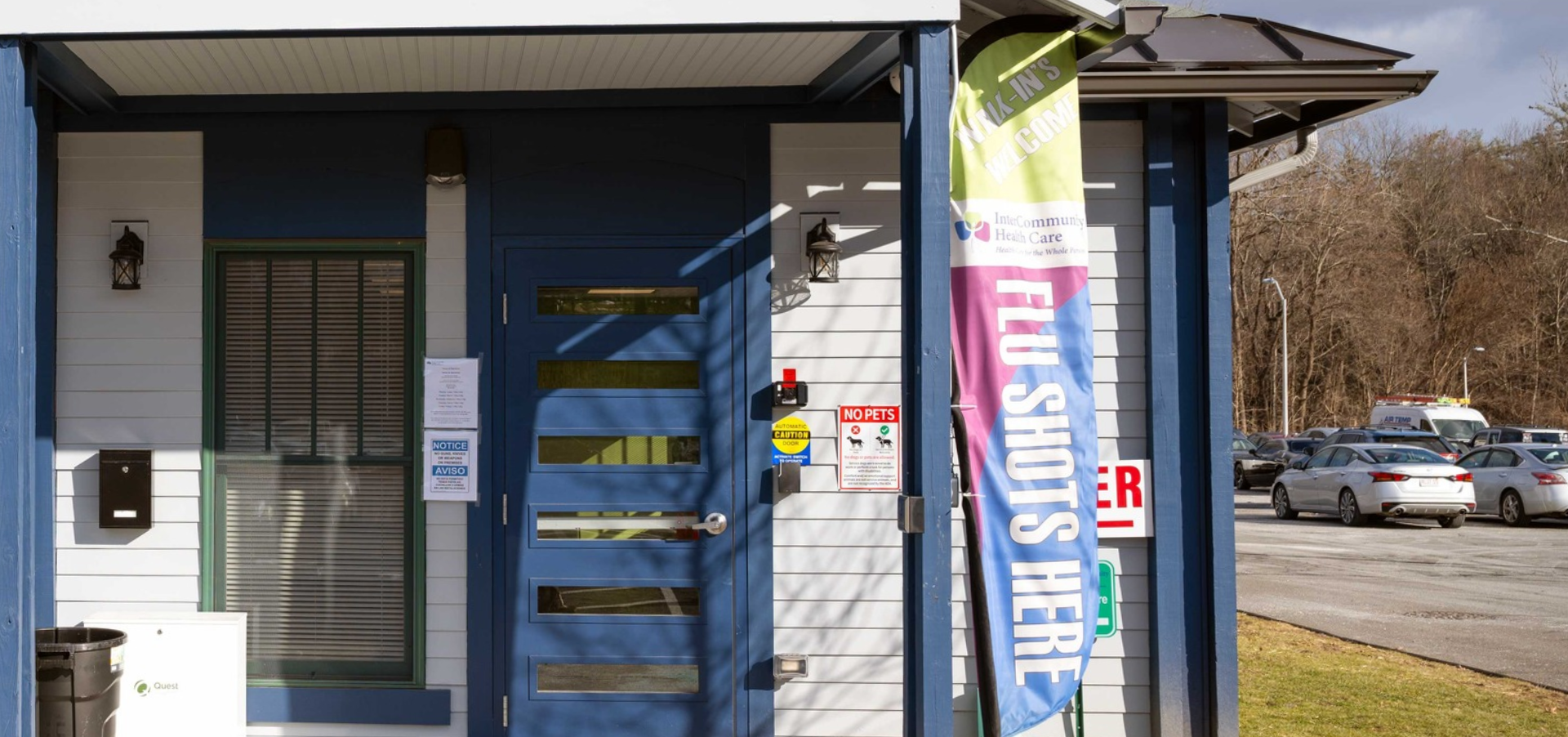
Flu season is here - it's time to get your annual vaccination! Learn more about how getting your flu shot can keep you, your family, and your community healthy.
InterCommunity leadership poses for a photo at the 2026 gala.
October 26, 2026
Thank you for lighting up the night with us at InterCommunity's 2026 Fundraising Gala!
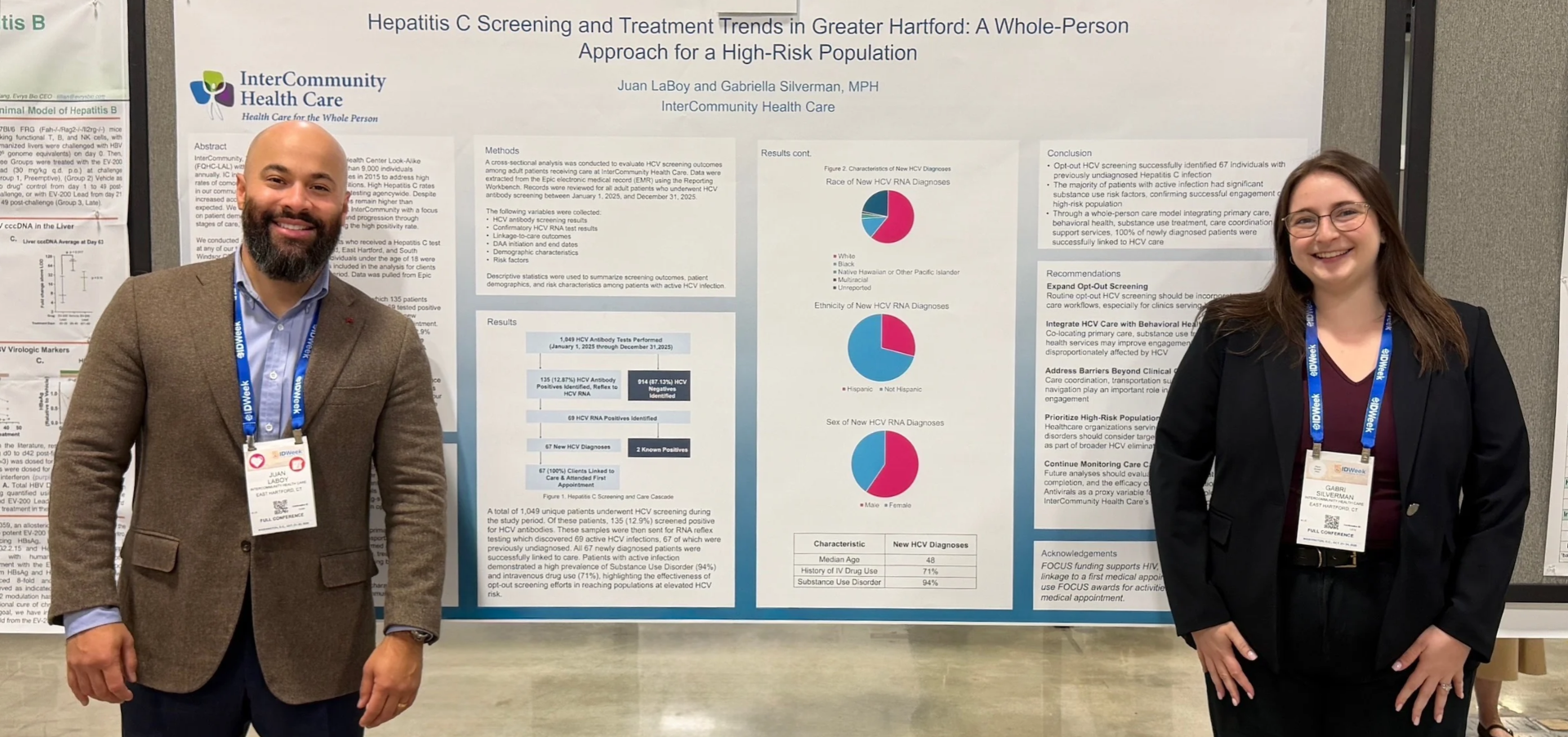
InterCommunity staff pose next to their research poster.
October 25, 2026
InterCommunity staff attended the Infectious Disease Week Conference in Washington, DC to present their research poster about Hepatitis C screening and treatment.
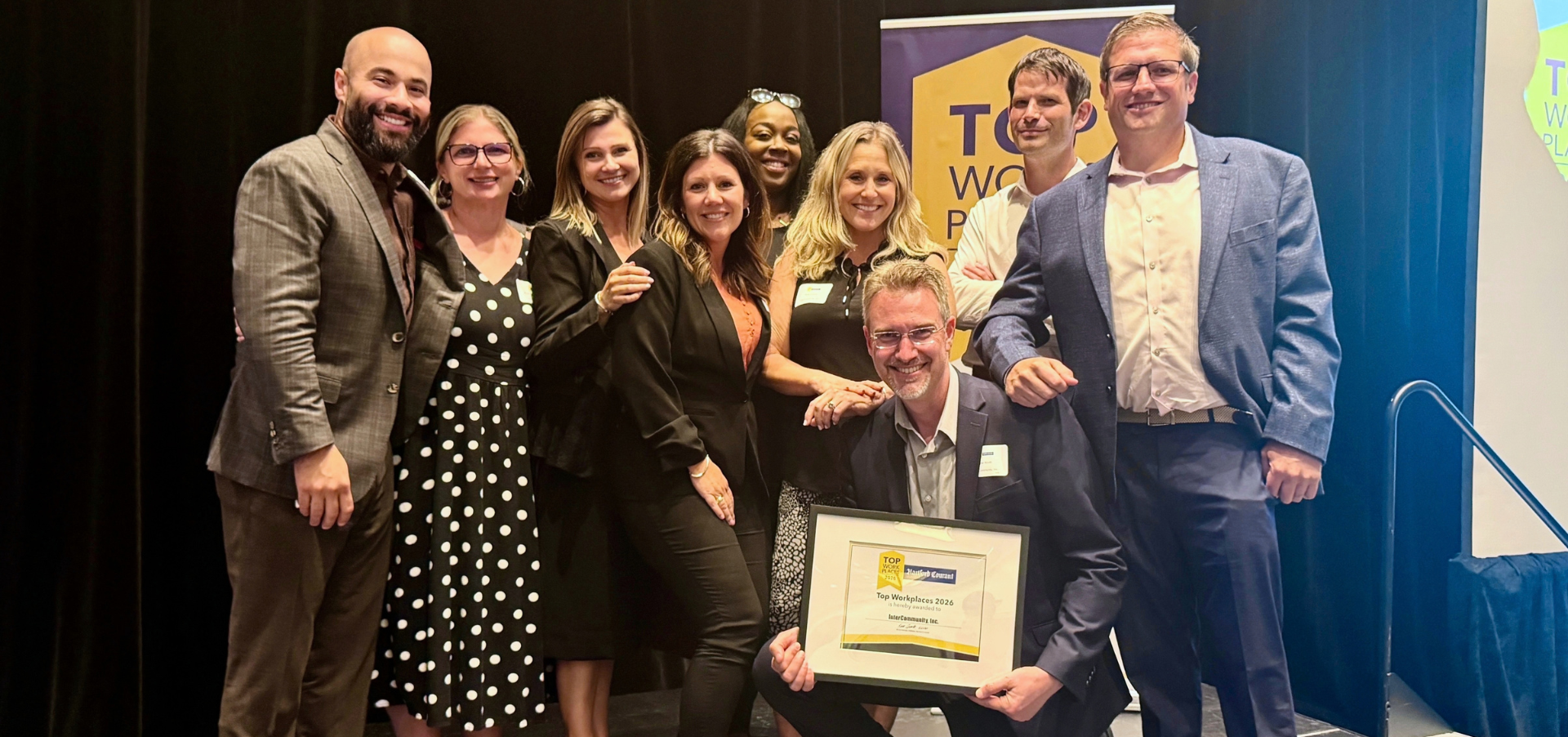
InterCommunity staff pose at the awards ceremony with the agency's 2026 Top Workplace award.
September 23, 2026
We are proud to officially announce that InterCommunity Health Care has been named a National and Regional Top Workplace once again thanks to staff feedback!
September 23, 2026
National Recovery Month is an annual campaign held every September to promote evidence-based treatment and recovery practices and support those on the recovery path.
A boy high fives a doctor with a bandaid on his shoulder, presumably after getting a vaccination.
August 26, 2026
August is National Immunization Awareness Month, a time to highlight the important role vaccines play in protecting people of all ages from preventable diseases.
An open road with a forward arrow against a blue sky and sunshine.
August 12, 2026
For those struggling with substance use, asking for help can be a hard step to take; and knowing where to start and where to turn can feel overwhelming. InterCommunity is here to be that first step.
A girl and a doctor smile and touch hands.
July 28, 2026
InterCommunity is hosting an all-day community event on 8/6 to celebrate National Health Center Week! Read the history of NHCW and learn more about this free event.
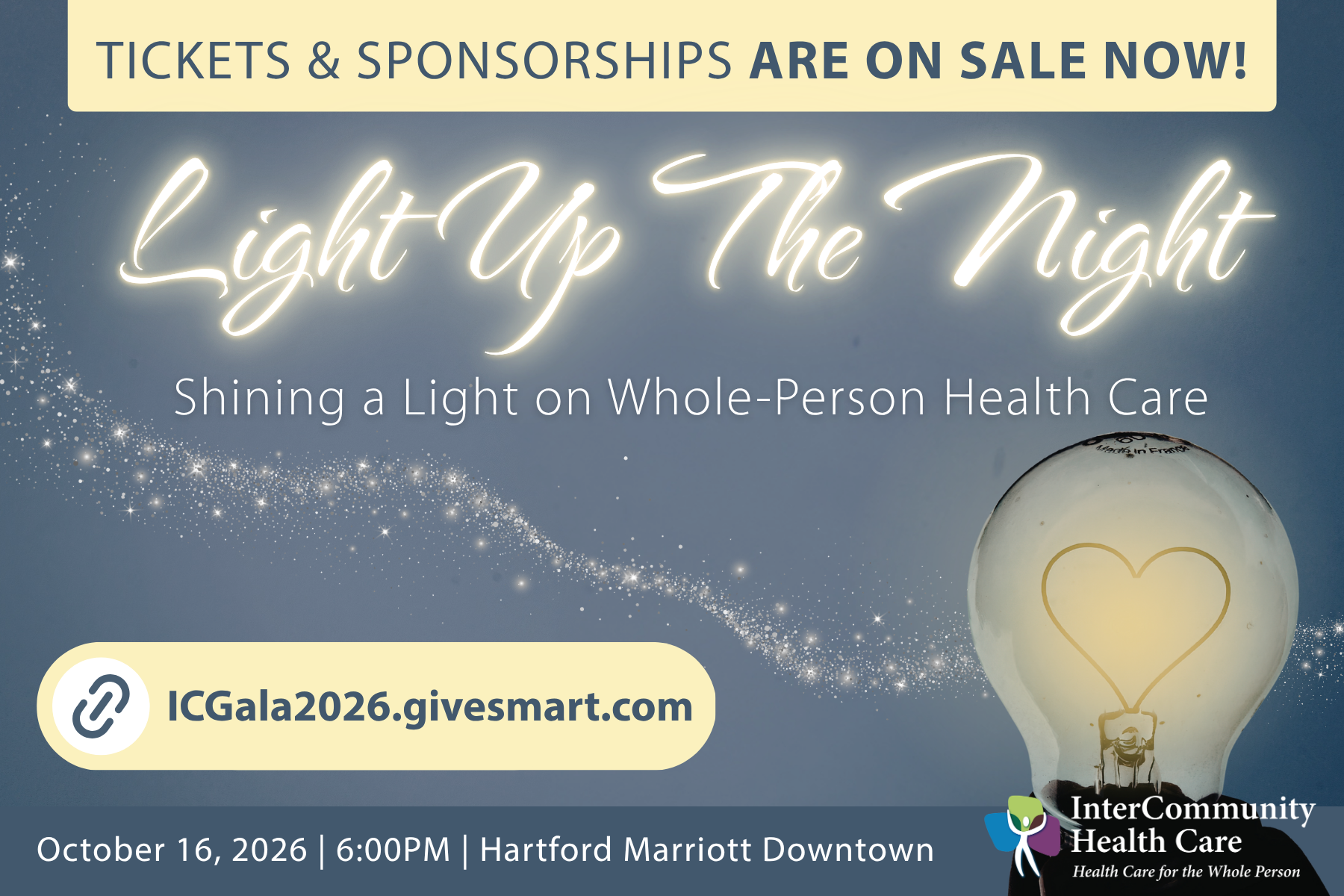
2026 Light Up the Night Gala graphic that lists event information and shows a lightbulb with a heart
July 27, 2026
InterCommunity is excited to invite you to support our mission at our annual Signature Gala Event!
A therapist speaks with a patient.
June 23, 2026
InterCommunity emphasizes the importance of mental health alongside physical health. Post-Traumatic Stress Disorder (PTSD) illustrates the significance of this work.